All Categories

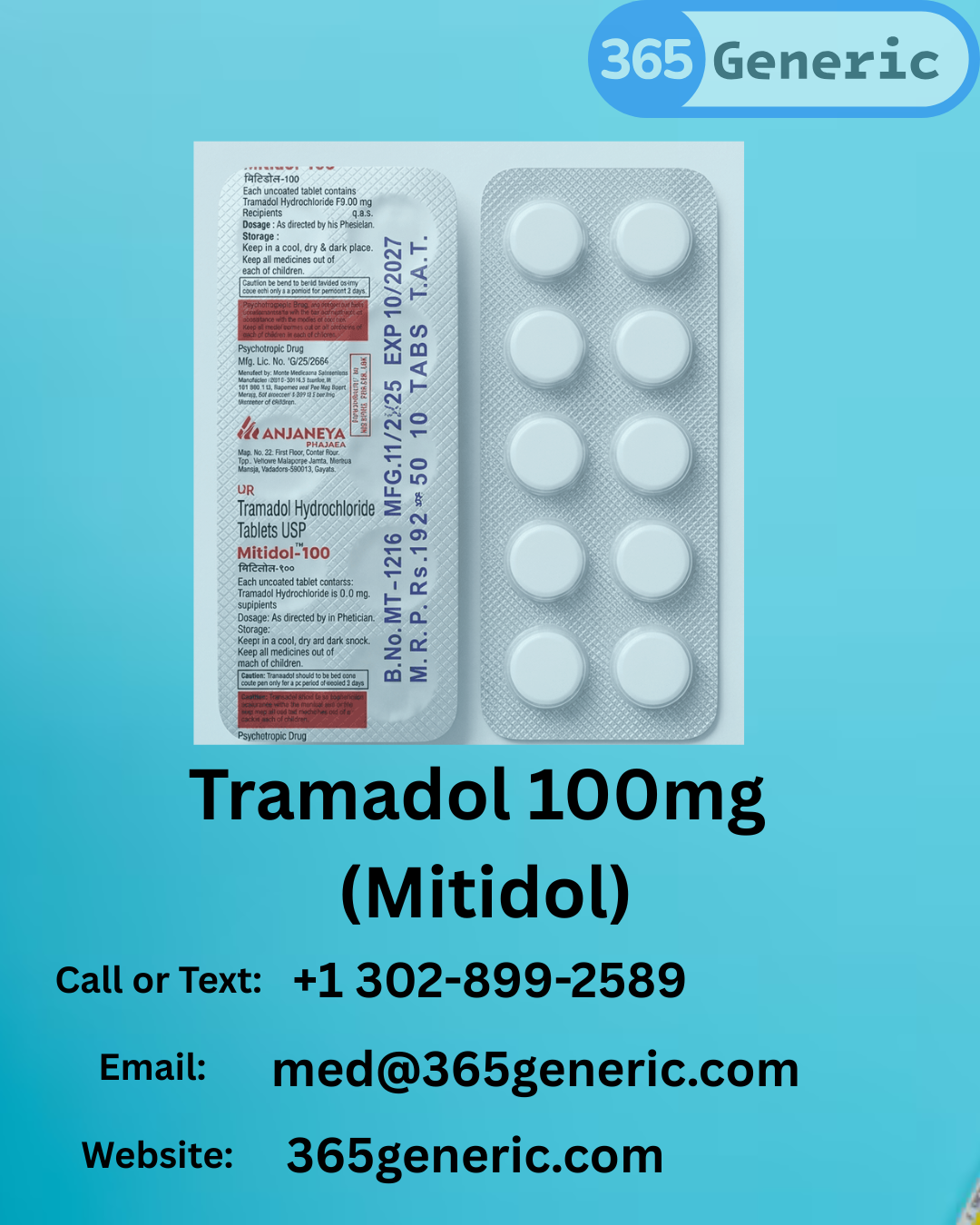
Tramadol 100mg is a prescription pain medication used to treat moderate to moderately severe pain when non-opioid pain relievers alone are not sufficient. It belongs to a class of medicines known as opioid analgesics, although it also has additional effects on certain brain chemicals involved in pain control.
Tramadol works by changing how the brain and nervous system perceive pain. It is commonly prescribed for pain associated with injuries, surgery, musculoskeletal conditions, and certain chronic pain conditions when considered appropriate by a healthcare provider.
Because Tramadol carries risks of dependence, misuse, and serious side effects, it should only be taken exactly as prescribed.
Generic Name: Tramadol Hydrochloride
Strength: 100 mg
Drug Class: Opioid Analgesic
Dosage Form: Oral Tablet (strength and formulation may vary)
Prescription Status: Prescription-only medication
Tramadol helps relieve pain through two complementary mechanisms:
These combined actions help reduce pain and improve comfort in appropriately selected patients.
Healthcare providers may prescribe Tramadol 100mg for:
Treatment decisions depend on the cause of pain, medical history, and individual patient needs.
When used as prescribed, Tramadol may help:
Take Tramadol exactly as prescribed by your healthcare provider.
General guidance includes:
Different formulations of Tramadol have different dosing schedules. Always follow the instructions provided for your specific product.
For best results:
The onset of action depends on the formulation prescribed.
Immediate-release formulations generally begin relieving pain within about 1 hour, while extended-release products are designed to provide longer-lasting pain control over the course of the day.
The length of treatment depends on:
For many acute conditions, Tramadol is prescribed for the shortest duration needed to control pain.
Common side effects include:
Many side effects are mild, but persistent or bothersome symptoms should be discussed with your healthcare provider.
Seek immediate medical attention if you experience:
These reactions require urgent medical care.
Tell your healthcare provider if you have:
Your healthcare provider will determine whether Tramadol is appropriate based on your medical history.
Tramadol may interact with:
Always provide your healthcare provider with a complete list of medicines, supplements, and herbal products you take.
Yes.
Tramadol carries a risk of physical dependence, misuse, and addiction, even when used as prescribed. The risk varies between individuals.
To reduce risk:
Do not stop long-term treatment suddenly without medical guidance, as withdrawal symptoms may occur.
If you miss a scheduled dose:
Follow your healthcare provider's instructions for your specific dosing schedule.
Store Tramadol tablets:
Dispose of unused medication according to local pharmacy or community take-back recommendations.
To help reduce risks during treatment:
Tramadol 100mg is prescribed to treat moderate to moderately severe pain when other pain management options are not sufficient.
Immediate-release formulations often begin working within about one hour, while extended-release products provide longer-lasting pain relief.
Yes. Drowsiness and dizziness are common side effects, particularly when starting treatment or after a dose increase.
No. Combining alcohol with Tramadol can increase the risk of severe drowsiness, breathing problems, and other serious side effects.
Tramadol has the potential for misuse, dependence, and addiction. It should only be used exactly as prescribed.
If you have been taking Tramadol regularly for an extended period, do not stop it abruptly without consulting your healthcare provider, as withdrawal symptoms may occur.
Tramadol 100mg is a prescription opioid analgesic used to manage moderate to moderately severe pain when appropriate. When taken exactly as prescribed, it can help improve comfort and daily functioning for people experiencing acute or chronic pain.
Because Tramadol carries important risks—including drowsiness, dependence, breathing problems, seizures in susceptible individuals, and interactions with other medications—it should only be used under the supervision of a qualified healthcare professional. Always follow your prescribed treatment plan and report any concerning symptoms promptly.
This information is provided for educational purposes only and should not replace professional medical advice, diagnosis, or treatment. Always consult a licensed healthcare provider before starting, stopping, or changing any medication.